
Diagnostic tools for healthcare professionals and their uses
10/26/2026 05:17:08
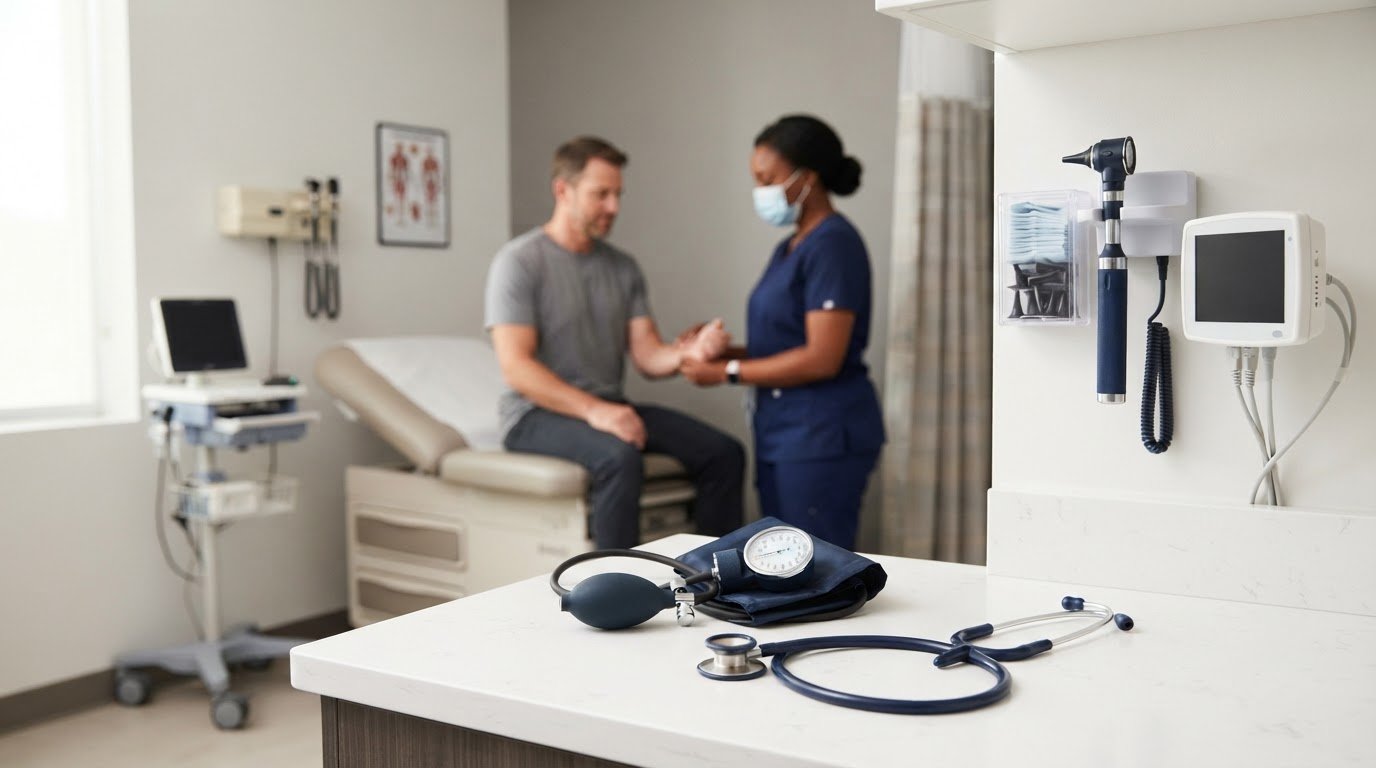
Diagnostic tools for healthcare professionals include equipment that measures vital signs, supports physical examinations, and helps assess specific health concerns. Stethoscopes and blood pressure devices are used in routine assessments, while otoscopes and ophthalmoscopes help examine the ears and eyes. ECG machines, monitors, imaging systems, and laboratory tests provide other types of clinical information.
Choosing equipment involves more than the test it performs. The care setting, intended use, workflow, and staff’s ability to interpret results all affect whether a tool fits day-to-day practice. A device suited to a focused examination may not meet the needs of a clinic that monitors several vital signs or performs cardiac assessments.
This guide covers common diagnostic equipment and what it is used for, from listening to heart and lung sounds to examining the ear canal and measuring blood pressure. It also explains how needs differ across primary care, hospitals, and specialty clinics, and what to consider when selecting equipment. The aim is to connect each tool’s function with the clinical task it supports.
Key Takeaways
- Match the blood pressure device to the measurement method and clinical workflow, and account for calibration needs with aneroid instruments.
- Choose diagnostic equipment by its intended use, care setting, staff workflow, and the ability to interpret its results.
- Use an otoscope to examine the ear canal and eardrum; a clean disposable speculum can be used for each patient.
- Use a stethoscope to assess heart, lung, and intestinal sounds as part of a clinical examination.
- Build an equipment selection around the needs of the setting, from routine primary care assessments to specialized imaging or monitoring.
Blood pressure measurement with sphygmomanometers
A sphygmomanometer measures blood pressure, while a stethoscope lets clinicians hear the sounds used in manual measurement. Together, these medical tools provide information about blood pressure and sounds from the heart, lungs, and blood flow.
Manual, Aneroid, and Digital Monitors
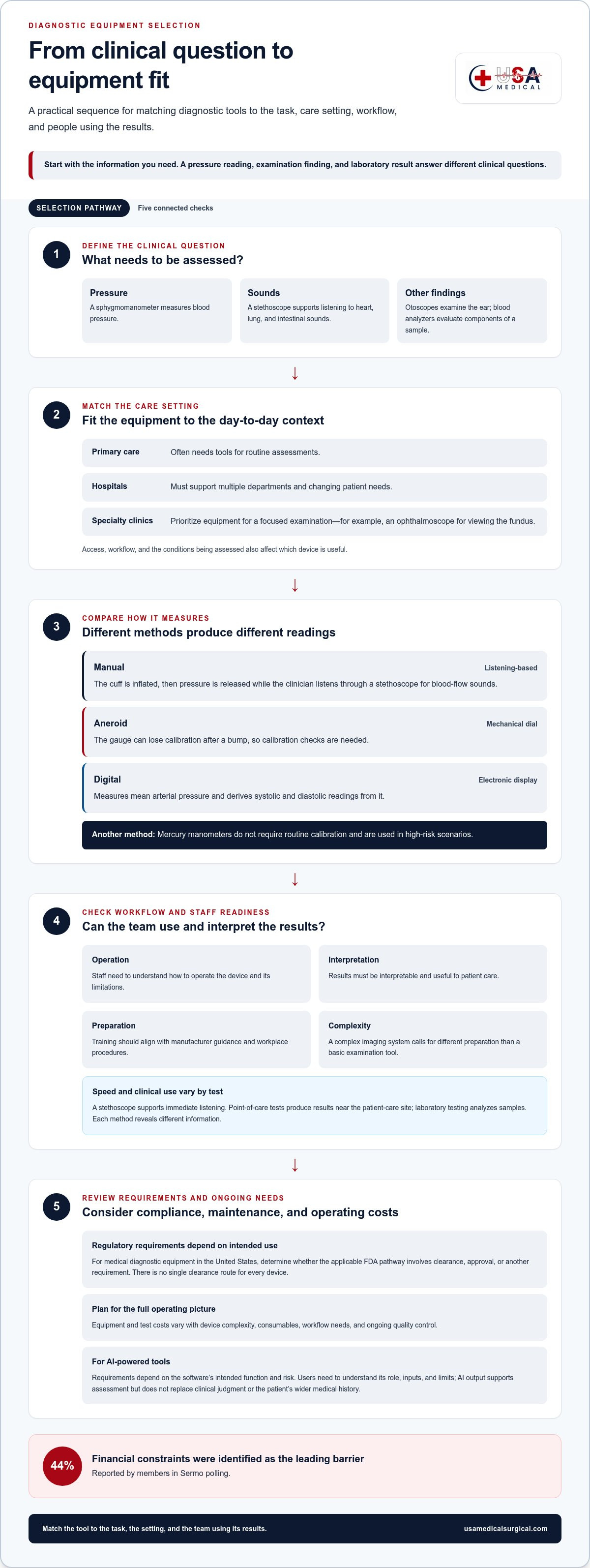
A manual sphygmomanometer uses a cuff and pressure gauge. An aneroid monitor has a mechanical dial, while a digital monitor displays readings electronically. The type matters because each measures and presents blood pressure differently. With a manual device, a clinician listens through a stethoscope as cuff pressure changes. Digital devices measure mean arterial pressure and derive systolic and diastolic readings from it.
Aneroid gauges can lose calibration after a bump, so they need calibration checks. Mercury manometers do not require routine calibration and are used in high-risk scenarios. These differences matter when selecting equipment for a hospital or clinic: the measurement method, handling, and need for checks all affect how a device fits the setting.
Non-Invasive Blood Pressure Monitoring
Non-invasive blood pressure monitoring measures pressure with a cuff placed around the arm, without inserting a device into an artery. It allows clinicians to assess blood pressure during routine checks or monitoring. A digital monitor measures mean arterial pressure and derives systolic and diastolic readings from it. The displayed values help clinicians identify patterns and decide whether further assessment is needed.
Manual measurement uses a different, listening-based approach. The cuff is inflated, then pressure is released while the clinician listens with a stethoscope for blood-flow sounds. The readings are interpreted as the cuff deflates. This approach links the pressure gauge to sounds in an artery rather than relying on an electronic display.
Stethoscopes also support broader physical examinations. Clinicians can listen to heart and lung sounds, as well as blood flow in arteries and veins. Heart sounds may reveal patterns such as murmurs, arrhythmias, or valve irregularities. Lung sounds can offer clues about conditions such as pneumonia, bronchitis, and pulmonary congestion. These findings can guide further assessment, but a stethoscope does not establish a diagnosis on its own.
Blood analyzers address a different diagnostic need. Blood tests assess components such as red and white blood cells, platelets, glucose, electrolytes, and organ-function markers. Hematology testing focuses on blood cells and platelets, helping clinicians identify patterns that may prompt further evaluation. Glucose and electrolyte results provide other types of information. Unlike a sphygmomanometer, an analyzer evaluates a blood sample rather than measuring pressure or listening to circulation.
These tools answer different clinical questions. A sphygmomanometer measures pressure, a stethoscope captures sounds, and a blood analyzer evaluates sample components. Choose among them according to whether the assessment calls for a pressure reading, examination findings, or laboratory evidence.
Considerations when selecting diagnostic equipment
Select equipment by matching its clinical purpose to the care setting, workflow, and staff expertise. A device is useful when it helps answer a specific question and its results can inform patient care.
Choosing Tools for Care Settings
Primary care often needs tools for routine assessments, while hospitals must support multiple departments and changing patient needs. Specialty clinics prioritize equipment suited to a specific examination, such as ophthalmoscopes for viewing the fundus. Access, workflow, and the conditions being assessed all affect which device is useful.
For medical diagnostic equipment in the United States, FDA requirements depend on the device and its intended use. Before adoption, determine whether the applicable pathway involves clearance, approval, or another regulatory requirement. There is no single clearance route for every device.
Training needs also depend on the equipment and the user’s clinical role. Staff need to understand how to operate the device, its limitations, and how to interpret results. Instruction should align with manufacturer guidance and workplace procedures. A complex imaging system calls for different preparation than a basic examination tool.
Accuracy, Speed, and Clinical Use
Accuracy, speed, and clinical use vary by test. A stethoscope supports immediate listening, while laboratory testing analyzes samples for findings such as blood-cell patterns or glucose. Point-of-care tests produce results near the patient-care site to support timely decisions. Each method reveals different information, so results must be interpreted in the context of the patient and suspected diseases.
AI-powered diagnostic tools analyze medical data and support clinical decisions. In the United States, regulatory requirements depend on the software’s intended function and risk. Users also need to understand the tool’s role, inputs, and limits. AI output informs assessment; it does not replace clinical judgment or consideration of the patient’s wider medical history.
Costs, Risks, and Limitations
Equipment and test costs vary with device complexity, consumables, workflow needs, and ongoing quality control. Sermo polling found financial constraints were identified as the leading barrier by 44% of members. Compare the full operating needs, including staff time and supplies, rather than considering the device alone.
False positives and false negatives can occur when a test is used outside its intended context or results are interpreted without considering other findings. There is no single false-positive rate for all tools; it depends on the test and the population assessed. A positive screening result may require further evaluation before a diagnosis is established.
Maintenance supports dependable results. Follow the manufacturer’s instructions, document quality-control checks, and arrange calibration checks where the device requires them. For example, aneroid sphygmomanometers can lose calibration after impact. A clear maintenance process helps keep equipment ready for its intended clinical use. Explore diagnostic equipment options when aligning equipment choices with care needs.
Ear canal and eardrum examination with otoscopes
An otoscope is a handheld medical device that lets a physician examine the ear canal and eardrum. Its view can help identify an ear infection or a foreign object. This visual assessment answers a different question than measuring temperature: an electronic thermometer measures temperature, while an otoscope shows visible structures in the ear.
During an examination, the clinician uses the otoscope to view the ear canal and eardrum. The findings can contribute to an assessment of different ear concerns. For example, suspected infection and a possible foreign object are separate reasons to inspect the canal. The device supports observation; the clinician interprets what is visible alongside the patient’s symptoms and other findings.
A clean, disposable speculum can be attached to the otoscope for each patient. The speculum is placed at the ear opening, helping make each examination patient-specific. In a busy hospital or clinic, preparing a fresh speculum before each examination provides staff with a clear, repeatable workflow step. The otoscope provides the view; the speculum enables access to the canal.
Otoscopes are used in a range of settings, including primary care and hospital examinations. Their handheld design supports direct inspection without requiring imaging or laboratory testing for an initial visual check. A physician can use the view to assess whether an observed concern, such as a foreign object, needs further attention. The device does not measure blood pressure or temperature.
What a clinician sees through an otoscope is a visual examination, not automatically a saved photograph or diagnostic report. Its primary value is direct visibility of the ear canal and eardrum. This distinction matters when choosing equipment: clinicians who need visual access use an otoscope, while those seeking documented images need a tool designed for that purpose.
Otoscopes are part of a broader range of diagnostic tools for healthcare professionals. A stethoscope helps assess sounds, and a sphygmomanometer measures blood pressure. An otoscope supports an ear examination. Each device suits a different clinical question, so select equipment according to the intended assessment, not just the broad label of diagnostic equipment.
To prepare for an examination, ready the otoscope and a new, clean disposable speculum, then use the device to view the ear canal and eardrum. Consider the patient, the suspected concern, and the examination setting. These practical steps help clinicians use the otoscope for its specific purpose: examining visible ear structures and identifying findings such as infection or a foreign object.
Stethoscopes for listening to heart, lung, and intestinal sounds
A stethoscope lets a clinician listen to sounds inside the body during a clinical assessment. Heart, lung, intestinal, and blood-flow sounds add information that visual examinations and pressure readings cannot provide. René Laennec invented the first version in the early 19th century. The instrument remains useful because it helps assess body function directly, using sound as one part of a broader clinical picture.
Heart sounds can reveal patterns that prompt closer assessment. A clinician may listen for murmurs, arrhythmias, or irregularities associated with heart valves. These findings can guide clinical reasoning, but listening alone does not establish a diagnosis. A physician considers the sounds alongside symptoms, examination findings, and other testing. This illustrates how diagnostic tools for healthcare professionals contribute distinct evidence without providing a complete answer on their own.
Lung sounds offer another set of clues. Listening across the chest can help identify patterns associated with pneumonia, bronchitis, or pulmonary congestion. The location and character of a sound matter, so clinicians compare findings from different areas instead of relying on one listening point. These observations can guide whether further assessment or testing is appropriate.
Stethoscopes also support assessment of intestinal sounds and blood flow. Listening over the abdomen helps clinicians note bowel sounds as part of an examination. Listening over arteries and veins can reveal blood-flow sounds. Each use focuses on a different body system, so clinicians interpret what they hear in light of the examination and other evidence.
Acoustic and digital stethoscopes share the broad purpose of listening to internal sounds. An acoustic model carries sound through its chestpiece and tubing to the clinician’s ears. A digital model uses electronic components to capture and present sound. The distinction matters when matching a device to the clinical workflow, but both approaches require the user to interpret what they hear. Both are diagnostic tools for healthcare professionals because they support direct listening during examinations.
Blood pressure measurement shows how a stethoscope can work alongside another instrument. With a manual sphygmomanometer, the clinician listens for blood-flow sounds while releasing pressure from the cuff. The stethoscope does not measure pressure; the sphygmomanometer does. Together, the instruments support a manual assessment, unlike a digital monitor’s displayed reading.
When selecting a stethoscope, consider the assessments performed and the setting. Clinicians listening to heart and lung sounds need access to those areas; abdominal assessments add intestinal sounds to the examination. Careful listening and clinical context shape the value of each finding. Used alongside other diagnostic tools for healthcare professionals, a stethoscope helps build a fuller picture without replacing other evidence.
Which diagnostic tools are best for primary care, hospitals, and specialty clinics?
The right fit depends on the clinical questions a setting handles most often. Primary care needs tools for broad assessments, hospitals address varied conditions, and specialty clinics focus on particular body systems. Start with the tasks clinicians perform, then match equipment to those tasks and to how findings inform care.
In primary care, a stethoscope, blood pressure device, otoscope, and thermometer support common physical assessments. A reflex hammer helps assess nervous-system reflexes, while an ophthalmoscope lets clinicians examine the fundus. Point-of-care tests can provide results at or near the patient-care site, supporting clinical decisions and treatment adjustments. Together, these tools help clinicians evaluate different concerns and decide whether further testing is needed.
Hospitals need equipment to support different departments and diagnostic pathways. X-ray imaging uses ionizing radiation to show internal structures, especially bones, and can help assess fractures, infections, tumors, or pneumonia. CT combines computer processing with X-ray technology to produce detailed cross-sectional images. MRI uses powerful magnets and radio waves to image soft tissues without ionizing radiation. Laboratory tests analyze bodily-fluid samples to detect infections, assess organ function, and monitor chronic diseases.
Specialty clinics can prioritize tools suited to their focus. Ophthalmoscopes support examination of the fundus and can help practitioners identify retinal disorders or optic nerve irregularities. Dermatoscopes magnify skin lesions and moles for closer assessment. Spirometry measures breathing function and identifies obstructive or restrictive ventilation patterns. Ultrasound provides a non-invasive way to visualize soft tissues. These examples show why specialty settings may need different equipment from general clinics.
Consider the diagnostic question before choosing a device. A clinician assessing possible urinary concerns may use urinalysis to detect blood, protein, glucose, or bacteria. A patient with suspected hearing asymmetry may be assessed using the Weber test with a tuning fork. For rapid decisions near the care site, point-of-care testing serves a different workflow than laboratory analysis. Each method provides a distinct type of evidence.
Equipment selection also depends on who uses the tool, where results are interpreted, and how findings inform next steps. A diagnostic radiology monitor supports review of medical images, while a reflex hammer supports a hands-on neurological examination. Prioritize tools that answer frequent clinical questions and fit the setting’s workflow. No single device is right for every clinic, hospital department, or specialty service.
Focused assessments can add useful detail to a broader examination. Healthcare professionals use reflex hammers to assess the integrity and responsiveness of nervous-system reflexes. Dermatoscopes provide a magnified view of skin lesions and moles, supporting the assessment of skin cancers and other dermatological conditions. Urinalysis can detect blood, protein, glucose, or bacteria and help assess urinary tract infections, kidney disease, and diabetes.
USA Medical and Surgical Supplies: Blood Pressure Devices
USA Medical and Surgical Supplies offers equipment for clinical assessment, including blood pressure devices, Dopplers, ECG machines, and ECG electrodes. These categories support different needs, from measuring blood pressure to recording cardiac activity. Select equipment that matches your clinical workflow and the examinations your setting performs.
For a blood pressure assessment, explore the blood pressure device options. For cardiac testing, ECG machines and electrodes are relevant equipment categories, while Dopplers support another type of diagnostic assessment. Choosing by intended use keeps procurement focused on the task at hand.
Visit usamedicalsurgical.com to browse these equipment categories or contact USA Medical and Surgical Supplies.
Make your next equipment decision with purpose
Use your next procurement decision to address a practical gap in your clinical workflow. Identify the assessment or monitoring task that needs support, then choose equipment suited to how your team works and uses results. This focused approach keeps diagnostic tools for healthcare professionals aligned with day-to-day clinical needs, rather than adding equipment without a clear role.
USA Medical and Surgical Supplies offers Blood Pressure Devices, Dopplers, and ECG Machines for different diagnostic tasks. Consider which category fits your next equipment need, whether you need to measure blood pressure, use Doppler technology, or perform ECG testing.
Contact USA Medical and Surgical Supplies to discuss your equipment needs. A clear next step can help you move from identifying a workflow gap to choosing equipment with a defined purpose.
Frequently Asked Questions
What diagnostic tools do healthcare professionals use in clinical practice?
Healthcare professionals use examination instruments, monitors, imaging equipment, and laboratory tests. A reflex hammer or tuning fork supports a focused physical assessment, while an ECG machine records the electrical activity of the heart. Imaging systems show internal structures, and laboratory analyzers assess samples. These diagnostic tools for healthcare professionals provide different kinds of evidence, so clinicians choose according to the information needed for a specific assessment.
What are the main types of medical diagnostic tools and tests?
Medical diagnostic tools and tests fall into several functional groups: physical examination instruments, devices that measure body signals, imaging systems, and tests that analyze samples. For example, an ophthalmoscope supports direct visual examination, while an ECG records cardiac electrical activity. X-ray and MRI create images using different methods. Blood and urine tests examine sample components. These groups differ in what they measure or reveal, not simply in device size.
How should healthcare professionals choose and validate diagnostic tools?
Start by defining the clinical question, intended users, care setting, and results the team needs. Then assess whether the tool fits the workflow and whether staff can operate and interpret it appropriately. Follow the manufacturer’s instructions, establish relevant quality checks, and document performance as part of routine practice. Before making the tool part of standard workflows, review whether its results are usable in the intended setting.
What are the costs of diagnostic equipment and tests in the United States?
Costs vary with device complexity, consumables, workflow needs, and ongoing quality control; compare these along with staff time and supplies. In a Sermo poll, 44% of members identified financial constraints as the leading barrier to using diagnostic technology.