Infection Control Supplies for Healthcare PPE and Hand Hygiene
11/13/2026 05:00:46
Hospital infection control relies on coordinated practices and supplies that help reduce the spread of microorganisms through hands, equipment, surfaces, wounds, and healthcare waste. Infection control supplies for healthcare include protective equipment, hand hygiene products, antiseptic skin preparations, and surface and equipment disinfectants. These products support infection prevention alongside safe handling, cleaning, and disposal practices.
Choosing supplies can feel complex because each type has a different purpose. Gloves and masks create barriers during care, hand hygiene products support clean hands, and disinfectants are intended for appropriate surfaces and equipment.
This guide covers the main supply categories, their purposes, and practical considerations for selection and storage. It also explains where medical gloves, protective apparel, and other infection control products fit into a healthcare supply plan.
Key Takeaways
- Match gloves, masks, gowns, and other protective items to the care activity and potential exposure.
- Choose hand hygiene products for the situation, and keep antiseptic skin preparation distinct from routine hand cleaning.
- Use prep pads and towelettes according to their intended purpose and product instructions.
- For surfaces and equipment, select disinfectant wipes suited to the item and follow the product directions for use.
- Safe storage, handling, and disposal help keep infection control supplies ready for use and prevent avoidable contamination.
Personal protective equipment, including gloves, masks, gowns, and coverings
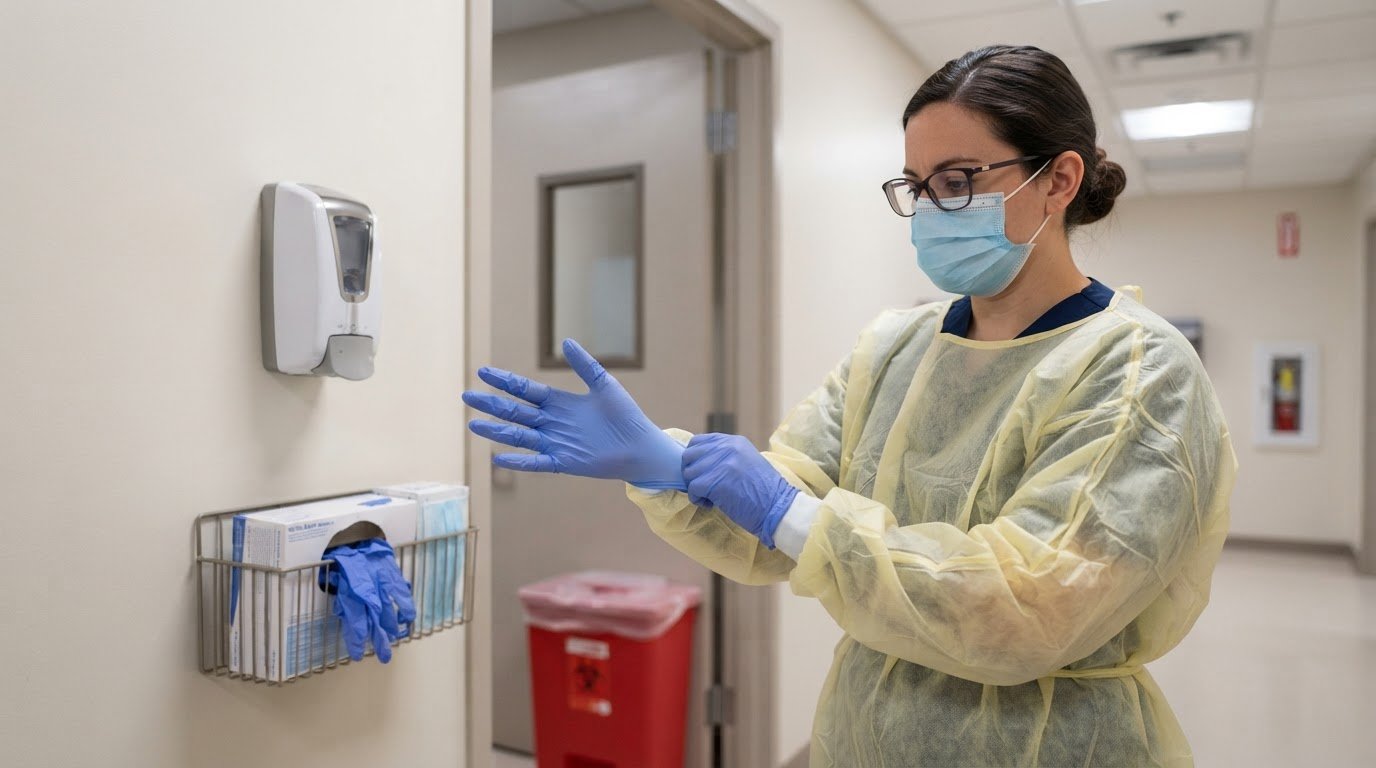
Personal protective equipment creates a barrier between healthcare workers and potential sources of contamination. Gloves, masks, gowns, goggles, and face shields each serve a different role during patient care. These protective measures extend to veterinary settings as well, where facilities like the Animal Hospital of Sullivan County utilize appropriate barriers and sanitation routines during clinical procedures.
Exam and Surgical Gloves
Exam gloves are used for routine medical tasks, including patient contact and wound care. Surgical gloves are a separate category for surgical care. Choose gloves to suit the activity and required protection. They help reduce direct contact with blood, body fluids, and contaminated materials. Change gloves between appropriate patient care activities, and dispose of them correctly after use.
Glove Materials and Uses
Nitrile, latex, and vinyl are common exam glove materials. Nitrile gloves are latex-free and puncture-resistant, making them an option when latex avoidance matters. Latex and vinyl offer other material choices; selection depends on the task and wearer’s needs. Match the material to the care activity and follow the product’s use and disposal directions. Do not reuse a disposable glove between patient care activities.
Choosing PPE Brands
Choose between brands of masks, gloves, gowns, and disinfectants by matching each item to its intended use, protective role, and product directions. For masks, gowns, or gloves, consider the care activity and the barrier needed; for disinfectants, consider the surface or equipment involved. How do healthcare facilities choose between different brands of masks, gloves, gowns, and disinfectants? They compare intended use, relevant protection details, and the manufacturer’s instructions rather than selecting by brand name alone. The U.S. Food and Drug Administration regulates surgical masks, N95 respirators, medical gloves, and gowns intended for medical-device use.
Other PPE covers the eyes, face, or body. Goggles and face shields protect areas that gloves do not, while gowns and protective clothing cover clothing and skin. Select items according to the exposure expected during the task. A mask, for example, does not replace gloves when hands may contact contaminated materials.
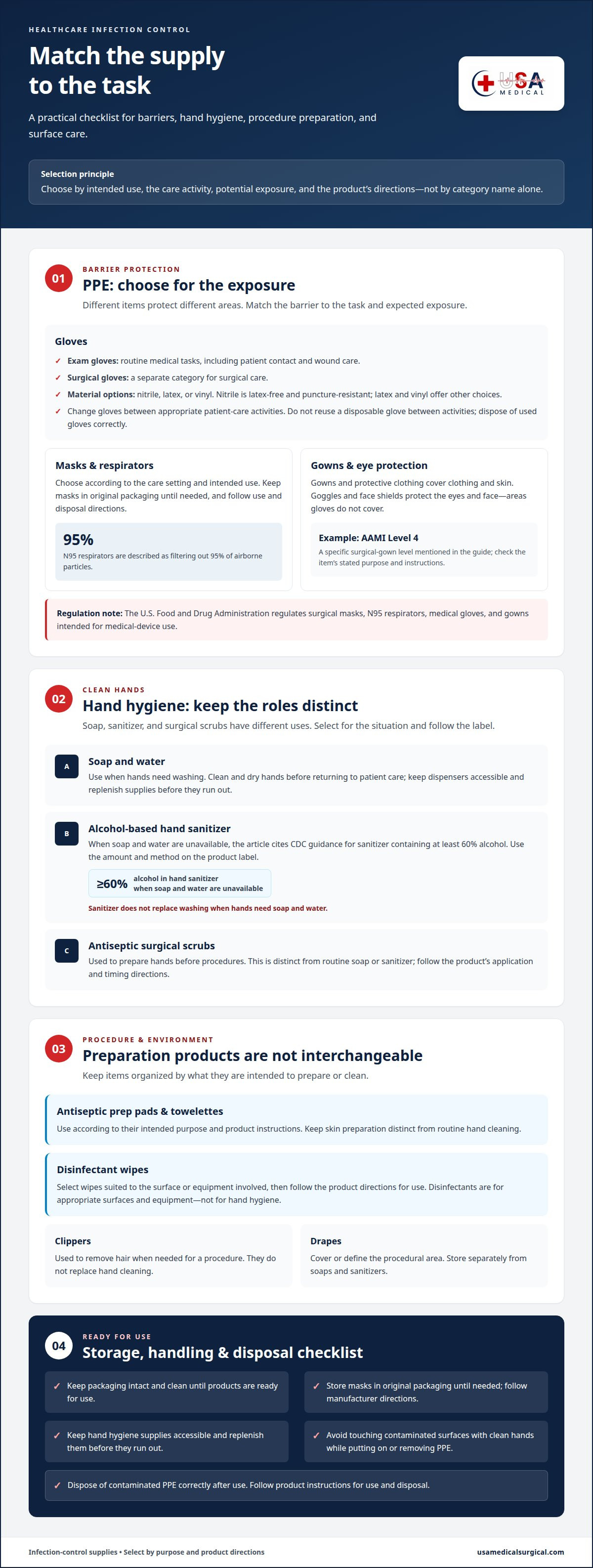
Some product details provide a concrete comparison. An AAMI Level 4 surgical gown is one example of a gown level. N95 respirators are listed as filtering out 95% of airborne particles. These figures describe specific products or categories, not a guarantee that every item suits every procedure. Use the product’s stated purpose and instructions to guide selection.
Safe PPE use also depends on how items are put on and removed. Gather the items needed for the task, avoid touching contaminated surfaces with clean hands, and remove used equipment in a way that limits exposure to the wearer and others. Dispose of contaminated PPE correctly after use. Changing gloves between appropriate patient care activities helps keep the barrier suited to the next task.
Hand hygiene products, including soaps, sanitizers, and surgical scrubs
Hand hygiene products support clean hands before and after patient care. Soap, water, alcohol-based sanitizer, and antiseptic surgical scrubs have distinct roles. Select the product for the task, then follow its label and manufacturer instructions. Surgical masks, N95 respirators, clippers, and drapes serve other purposes, so they should not be treated as hand-cleaning products.
Use soap and water when hands need washing. Clean and dry hands before returning to patient care. Keep soap dispensers accessible where staff provide care, and replenish supplies before they run out. Keep packaging intact and clean until the product is ready for use. These steps make hand hygiene easier to maintain within a clinic workflow.
When soap and water are unavailable, hand sanitizers should contain at least 60% alcohol, according to the Centers for Disease Control and Prevention. Place sanitizer where staff can reach it during patient care, and use the amount and method stated on the product label. A sanitizer is not a substitute for washing when hands need soap and water. Check the packaging and manufacturer directions before use.
Surgical scrubs can refer to antiseptic products used to prepare hands before procedures. Their purpose differs from routine soap and alcohol-based sanitizer. Follow the product directions for application and timing rather than assuming all scrubs work the same way. If “surgical scrubs” means surgical clothing, that apparel is separate from hand hygiene products and does not clean hands.
Surgical face masks and N95 respirators are respiratory protective products, not hand hygiene supplies. Surgical masks are described as suitable for everyday patient interactions and for preventing droplet spread. N95 respirators filter out 95% of airborne particles. Choose between them according to the care setting and the product’s intended use. Keep masks in their original packaging until needed, and follow the manufacturer’s directions for use and disposal.
Surgical clippers and drapes support procedure preparation, but neither replaces hand cleaning. Clippers are used to remove hair when needed for a procedure; drapes cover or define the procedural area. Store these separately from soaps and sanitizers. Packaging and product instructions identify intended use, helping staff select the right item for each task.
For clinic procurement, group hand hygiene products by function: routine washing, sanitizer use, and surgical hand preparation. Track packaging condition and restock points so accessible supplies remain available. Keep masks, clippers, and drapes in their own categories to avoid confusing procedure supplies with hand hygiene products. Browse infection control supplies to organize related procurement needs.
Personal protective equipment and medical-surgical products
Protective medical supplies support infection prevention when matched to the care task. Thoughtful selection, storage, and restocking help keep appropriate items available.
Protective Supplies and Facial Protection
Protective healthcare supplies include gloves, gowns, protective clothing, goggles, face shields, facemasks, and respirators. Choose facial protection according to the area that needs covering and the task’s potential exposure. Goggles cover the eyes, while a face shield covers more of the face. These products create a barrier against potential contamination. Keep medical equipment and disposable medical products organized by their distinct purposes.
PPE and Infection Prevention Requirements
CDC recommendations for infection prevention supplies vary by circumstance and setting, including during broad outbreaks. For the OSHA question, a single supply list cannot describe every workplace task; facilities should align PPE selection with the activity and applicable workplace procedures. The U.S. Food and Drug Administration reviews some PPE products through Premarket Notification, or 510(k) clearance, before they can legally be sold in the United States. Requirements and standards vary by PPE type.
Safe Storage, Use, and Disposal
Store medical products in clean areas, protect them from moisture, and follow the manufacturer’s storage instructions. Check packaging condition and expiry dates before use, and avoid damaged or contaminated supplies. Use disposable products according to their instructions, including any stated single-use limit. Dispose of used products under applicable biomedical waste procedures, keeping contaminated medical waste separate from general waste. Staff training in waste segregation supports consistent handling.
Healthcare facilities in the United States can purchase infection control supplies through medical-supply procurement channels. For bulk purchasing, group orders by product category and packaging unit, such as individual items, boxes, or cases. This makes quantities easier to track and helps align orders with routine use. Keep product instructions and specifications with procurement records so teams can distinguish similar supplies and select the right item for each task.
To reduce shortage risk, track stock levels and review usage patterns for frequently used items such as gloves and masks. Set reorder points based on the facility’s own consumption and delivery schedules. Organize suitable alternatives by product type rather than treating different supplies as interchangeable. Review packaging and expiry dates during stock rotation, and store incoming products according to manufacturer instructions. These steps help teams spot gaps before supplies run out.
Antiseptic prep pads and towelettes
Antiseptic prep pads and towelettes are single-use items for specific skin-preparation or cleansing tasks. Their ingredients and intended uses differ, so select a product by its label and the procedure. Examples include 70% isopropyl alcohol antiseptic, benzalkonium chloride towelettes, and povidone-iodine prep pads. Keeping these categories distinct supports infection prevention and makes clinic stock easier to manage.
For skin preparation, check the antiseptic’s active ingredient and concentration before placing it in a procedure kit. Dynarex Povidone-Iodine Prep Pads come in boxes of 100 or cases of 10 boxes. That packaging gives staff a clear unit for counting and restocking. Keep the sealed pads with the procedure supplies they support, and use each pad according to its label.
Ingredient differences matter. Dynarex BZK Antiseptic Towelettes contain 0.13% BZK, while 70% isopropyl alcohol antiseptic is another listed option. These products should not be treated as interchangeable just because both come in wipe form. Check the label for the intended application and follow its directions. This helps staff select the right item for the task rather than relying on packaging appearance.
Prepare the work area by gathering the required supplies before opening a pad or towelette. If the procedure calls for nitrile gloves, put them on as directed by the care protocol, then handle the antiseptic item without touching its usable surface. Open one disposable item at a time and discard it after use. This keeps the workflow orderly and limits unnecessary handling of unused products.
Storage and stock rotation also affect readiness. Keep prep pads and towelettes in clean, dry storage, protect their packaging, and follow manufacturer instructions. Review expiry dates while rotating stock, and separate opened or damaged packages from intact supplies. For example, count Dynarex Povidone-Iodine Prep Pads by box or case during inventory. This makes usage easier to track without mixing antiseptic types.
When replenishing supplies, group items by active ingredient, form, and procedure use. A shelf label for alcohol antiseptic should not be used for a BZK or povidone-iodine product. Keep product directions available where staff prepare supplies, and train staff to identify each package before use. Clear separation helps teams select an appropriate item without substituting one antiseptic for another.
Another distinct option is Hibiclens Antiseptic/Antimicrobial Skin Cleanser, a 4% CHG solution. It is sold in 16-ounce bottles, individually or in cases of 12. Keep this cleanser separate from disposable pads and towelettes when organizing supplies, and check its package directions for the intended skin-cleansing use. Staff can then identify the product by its formulation and container, rather than treating every antiseptic format as the same kind of item.
Disinfectant wipes for surfaces and equipment
Disinfectant wipes support cleaning routines for surfaces, medical equipment, and high-touch areas between patient visits. Examples in hospitals include shared equipment and frequently handled surfaces. Choose a wipe suited to the intended surface or equipment, using its label to guide selection. Keep surface disinfectants separate from antiseptic prep pads because they serve different purposes and are not interchangeable.
PDI Super Sani Cloth Germicidal Disposable Wipes are one example for surface and equipment disinfection. They are described as killing germs in 2 minutes or less and more than 28 different bacteria and virus germs. Those claims apply to that named wipe, not every disinfectant wipe. Read the product directions to understand its intended uses and the steps for applying it.
Build wipe routines around the surfaces staff handle during care. Identify high-touch areas and shared equipment, then use an appropriate wipe between patient visits. Follow the package directions for the surface, equipment, and application. This helps teams use supplies for their intended purposes rather than treating every wipe as interchangeable. Therapy and treatment settings may also have shared items that need attention between users.
Procurement teams can compare disinfectant wipes by intended use, product directions, and packaging. PDI Super Sani-Cloth is labeled as a disposable germicidal wipe. Keep the product name and directions accessible to staff, especially where wipes are stored for routine room turnover. Organize stock so surface wipes remain distinct from skin antiseptics and hand hygiene products.
Storage and handling matter in clinics and hospitals. Keep wipe containers closed between uses and follow manufacturer storage instructions. Review packaging during stock rotation, removing damaged or expired products from use. Use each wipe as directed, then dispose of it according to facility procedures. These steps help teams maintain an orderly supply process across patient rooms and shared equipment areas.
For practical inventory planning, track the wipe type, package count, and areas it supports. Stock records can distinguish equipment wipes from high-touch surface wipes when product directions permit those uses. Review usage patterns and replenish supplies before routine cleaning is disrupted. Keep the selected product’s instructions with the stock so staff can use it consistently in different settings.
Choose disinfectant wipes based on their labeled purpose and the surfaces or equipment in your workflow. Browse infection control supplies for products that support healthcare cleaning routines.
USA Medical and Surgical Supplies
USA Medical and Surgical Supplies supports healthcare buyers coordinating medical product procurement with infection control planning. Its catalog includes Blood Pressure Devices, Dopplers, ECG Machines, and ECG Electrodes. These diagnostic products can be included in broader purchasing workflows while remaining distinct from protective equipment, hand hygiene products, and disinfectants.
Use this guide to identify the infection control categories your facility needs, then plan orders around their intended uses and storage requirements. USA Medical and Surgical Supplies offers a range of medical products for healthcare settings, supporting buyers coordinating multiple supply needs.
Contact USA Medical and Surgical Supplies to discuss your procurement needs.
Make Your Next Procurement Step Count
Turn your infection control supplies for healthcare plan into a clear purchasing routine. Group products by purpose, keep ordering records consistent, and make supply decisions part of regular clinic operations. This helps staff coordinate day-to-day needs as procedures and workflows change.
USA Medical and Surgical Supplies offers infection control supplies alongside diagnostic products, including Blood Pressure Devices, Dopplers, and ECG Machines. These categories support broader procurement planning without treating diagnostic equipment as a substitute for protective or cleaning supplies.
Use your facility’s priorities to guide the next order, whether you are replenishing infection control products or coordinating other medical supplies. An organized purchasing process helps keep categories distinct and manage products according to their intended use.
Connect with USA Medical and Surgical Supplies to discuss your procurement needs. Take the next step with a clear plan for your healthcare setting.
Frequently Asked Questions
What Is Hospital Infection Control?
Hospital infection control involves coordinated practices that help reduce the spread of microorganisms in care settings. Contaminated hands, equipment, surfaces, wounds, and healthcare waste can contribute to transmission. Planning infection control supplies for healthcare settings means considering these routes alongside cleaning, hand hygiene, safe product handling, and waste disposal. Facilities also consider care needs and staff tasks when organizing prevention measures.
What infection control supplies are essential for healthcare facilities?
Core supplies include medical gloves, masks, gowns, hand hygiene products, antiseptic skin preparations, and surface disinfectants. The right mix depends on the services performed and the materials staff handle. For example, a clinic providing wound care needs suitable dressings alongside gloves, while shared equipment requires products intended for surface disinfection. A practical inventory groups infection control supplies for healthcare facilities by intended use.
What types of personal protective equipment are used in healthcare infection control?
Healthcare PPE can include gloves, protective clothing, gowns, facemasks, respirators, goggles, and face shields. Each item covers a different area or task. Goggles, for example, protect the eyes, while gloves help reduce direct hand contact with contaminated materials. Staff select PPE based on the care activity and potential exposure, then remove and dispose of used items in a way that limits exposure to themselves and others.
What disinfectants and sterilization supplies are approved for healthcare settings?
There is no universal list that covers every surface, device, and sterilization process. Use disinfectants according to their product labels and intended applications. Surface wipes, such as PDI Super Sani-Cloth, are for the surface and equipment uses listed on the product; they are not interchangeable with skin antiseptics. Sterilization supplies serve a separate purpose and can include pouches, autoclave tape, and biological indicators. Keep each category distinct during purchasing and storage.
What supplies are needed for standard and transmission-based precautions?
Standard precautions rely on supplies suited to the task, including hand hygiene products and appropriate PPE. Additional protective items may be needed for specific transmission risks or outbreak circumstances. The Centers for Disease Control and Prevention makes recommendations for different circumstances and settings during broad outbreaks. Facilities can organize supplies by care activity and keep related items, such as gloves, gowns, and facial protection, together so staff can access relevant products efficiently.