
Medical Supplies for Home Caregivers to Keep on Hand
11/18/2026 05:00:42
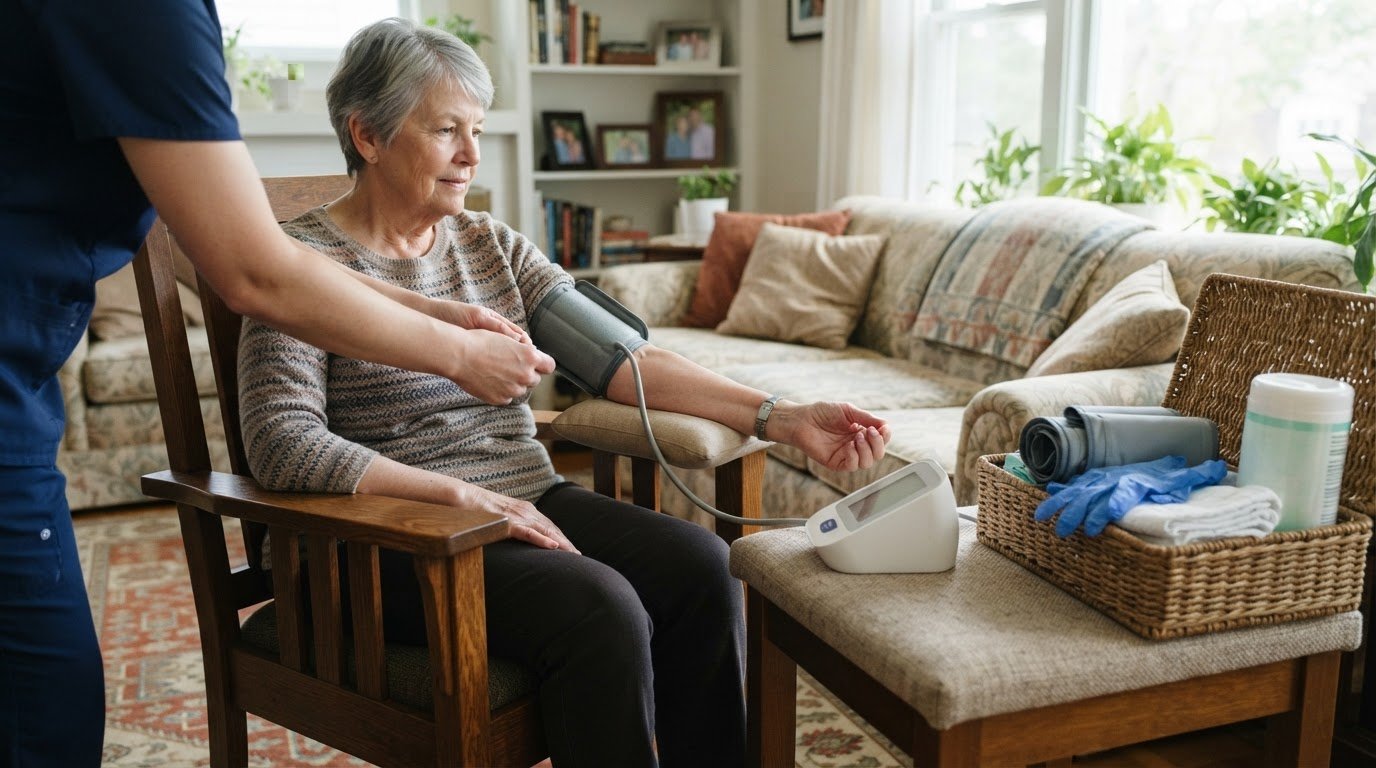
The best home-care supply list isn’t the longest one; it’s the one matched to the person’s daily needs. Medical supplies for home caregivers can support personal care, routine monitoring, safer movement around the home, and everyday hygiene. A practical checklist recommends keeping at least 6 washcloths, 4 bath towels, and a box of at least 50 disposable gloves on hand.
It can be hard to know which medical supplies for home caregivers are essential and which may only add clutter. Start with the care tasks that happen each day, then add supplies for specific needs. This guide covers personal-care and infection-control basics, monitoring tools and record-keeping, home safety, and routine equipment upkeep. It also explains when larger equipment may be part of a care plan, helping you organize supplies around useful support rather than guesswork.
Key Takeaways
- Build a supply list around the care tasks that happen regularly, then keep essential personal-care and hygiene items easy to reach.
- Use monitoring tools only when they address a daily care need, and keep observations and questions organized for the care team.
- Make everyday movement safer by clearing walkways, improving access to frequently used items, and reducing common trip hazards.
- Use disinfectant wipes as part of a consistent cleaning routine, following the product label and the device manufacturer’s care instructions.
- Review mobility needs and equipment placement together so the home supports safer, more comfortable daily routines.
1. Maintaining supplies for ongoing care
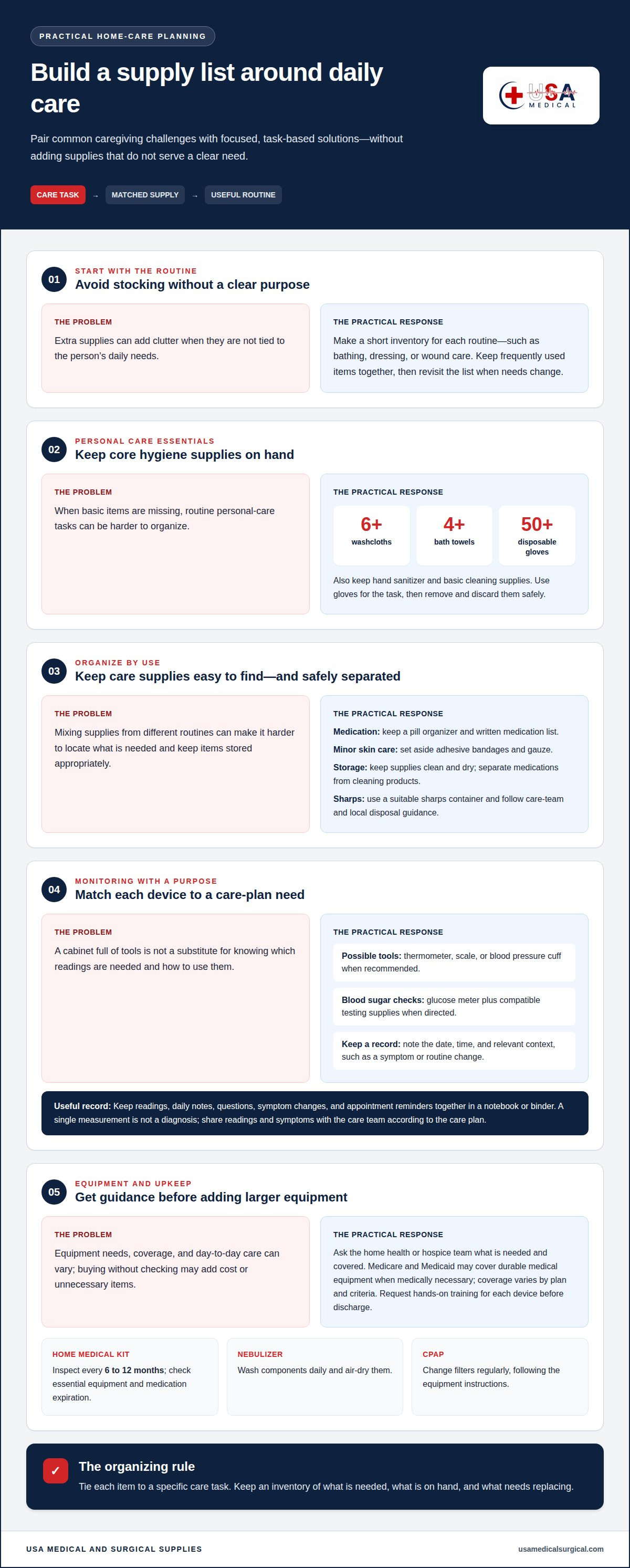
Make a short inventory of the supplies used for each routine, such as bathing, dressing, or wound care. Keeping frequently used items together makes daily tasks easier and helps caregivers feel more prepared. Revisit the list when needs change instead of stocking items without a clear purpose.
Medicare and Medicaid may cover durable medical equipment when it is medically necessary, but coverage varies. Key factors include whether an item qualifies as durable medical equipment and whether it meets the plan’s medical-necessity criteria.
For personal care, disposable gloves support tasks involving close contact, while hand sanitizer and basic cleaning supplies support routine hygiene. A home-care checklist recommends a box of at least 50 gloves for caregiver use during personal care. Use gloves for the task, then remove and discard them safely.
Supply costs depend on the item, whether it is disposable or reusable, and how often it needs replacing. Keep purchases focused by prioritizing items tied to daily care and avoiding duplicates of equipment already available.
Basic consumables are available from pharmacies and medical-supply retailers, while equipment is generally sold through medical-supply retailers. Match each purchase to a specific care task and the care plan to keep spending focused.
A printable checklist can make the inventory easier to manage. Record what is needed, what is on hand, and what needs replacing.
- At least 6 washcloths and 4 bath towels for personal care.
- A box of at least 50 disposable gloves, plus hand sanitizer and basic cleaning supplies.
- A pill organizer and a written medication list for medication routines.
- First-aid basics, such as adhesive bandages and gauze, for minor skin-care needs.
Keep supplies clean, dry, and grouped by use. For example, store bathing items together and keep first-aid materials separate from medication. Inspect a home medical kit every six to 12 months, checking that essential equipment is present and medications have not expired.
Medication and respiratory routines need separate checks. A pill organizer can help keep doses on schedule, and a written medication list gives caregivers a clear record. Wash nebulizer components daily and air-dry them. Change CPAP filters regularly, following the equipment instructions.
Before buying larger items, ask the home health or hospice team which equipment is needed and covered. Request hands-on training for each device before discharge. If mobility, pain, sleep, or daily care becomes more difficult, share the change with the care team.
Store supplies in clean, dry containers, and keep medications separate from cleaning products. Keep used sharps apart from routine supplies in a suitable sharps container. Follow the care team’s disposal instructions and local waste guidance. Do not place loose sharps with ordinary household items.
2. Caregiver monitoring and daily use
Choose monitoring tools for a defined care need, not simply to fill a cabinet. A thermometer, scale, or blood pressure cuff may be recommended in some cases. Blood pressure devices can support home readings when they are part of the care plan. Blood sugar monitoring also requires a glucose meter and compatible testing supplies when directed.
Before using a device, read its instructions and follow the care team’s directions. Record each result with the date, time, and relevant context, such as a symptom or change in routine. A notebook or binder can keep daily notes, questions, symptom changes, and appointment reminders together. This record helps caregivers describe what has changed between appointments.
- Use the blood pressure device selected for the person’s monitoring needs.
- Keep a thermometer available for temperature checks when recommended.
- For blood sugar checks, organize the meter and its compatible supplies together.
- Store written instructions with the related device for quick reference.
Consistent readings are easier to compare. Use the same device and follow its instructions each time. Note relevant changes, such as pain, poor sleep, or a different activity level. Do not treat a single measurement as a diagnosis. Share readings and symptoms with the care team according to the care plan.
Account for comfort and mobility when monitoring. Someone who has difficulty sitting upright may need a comfortable position before a reading. Keep equipment within reach, but arrange cords and supplies so they do not obstruct movement. During daily tasks, note whether changes affect eating, sleep, walking, or personal care. These details can help explain a result and show where added support may be useful.
Some home routines require more than one measurement tool. A scale may help track weight when the care plan calls for it. A blood pressure cuff does not measure temperature or blood sugar, so match each tool to its specific task. Keep a short inventory of devices and related supplies, noting what needs replacing or attention.
After hospital discharge, new monitoring instructions may change what caregivers record. Add the care team’s directions to the binder, including which readings to report and how to share them. If mobility, pain, or another change makes measurements difficult, describe the problem and ask the care team how to adjust the routine.
For a home setup centered on blood pressure monitoring, browse blood pressure devices and select equipment that fits the care plan.
Choose additional equipment to address a specific daily challenge rather than simply adding more items to the home. Greater difficulty with mobility, pain, sleep, or daily care may signal a need for added support or equipment.
3. Considering the home environment
Walk through the home routine from the person’s perspective. Check the route from bed to bathroom, the space beside the chair, and the path to frequently used items. Clear loose objects and cords from walkways, use non-slip mats where needed, and place daily essentials within easy reach. These practical changes can reduce obstacles during everyday movement.
According to HUD USER, 12% of U.S. homes include at least one person with mobility-related challenges. That figure highlights why a room-by-room review matters. Look at doorways, thresholds, lighting, and the distance between resting areas and necessary facilities. Note where a person needs extra support, then discuss changes with a healthcare provider or home health team.
Start with the main living and sleeping areas. Keep the path between the bed, chair, and bathroom clear. Move frequently used items, such as a phone, water, or clothing, to reachable surfaces. Route cords away from walking areas. Add night lights where someone moves after dark, and keep furniture in consistent positions so familiar routes remain predictable.
Bathrooms need particular attention during personal care. Use non-slip mats to improve footing, and keep towels and toiletries within reach. A home-care checklist advises using installed grab bars rather than suction-cup bars. Ask the home health team about safe equipment placement, especially if balance or mobility has changed.
Eating and drinking areas can also support independence. Easy-to-grip cups, straws, and lightweight utensils may make meals more comfortable for someone with limited strength or coordination. Place these items within reach from the usual seat. Keep the route to the table open, and avoid storing everyday supplies on high shelves.
Some changes call for equipment rather than rearrangement. Home health or hospice teams often provide or arrange medical equipment, including hospital beds, oxygen, or specialized devices. Before buying larger items, ask the care team what equipment is needed and covered. A healthcare provider can also help determine whether changes in mobility or daily care call for added support.
Use appointments to describe specific barriers at home. Instead of saying only that walking is harder, name the location and task, such as getting from the bedroom to the bathroom or reaching a kitchen counter. These examples help the team understand the problem and consider suitable equipment or adjustments.
Revisit the home setup as needs change. Review the route after furniture moves, new equipment arrives, or mobility changes. Check that devices have a stable place and that cords do not cross walking paths. A simple room-by-room review helps caregivers spot hazards early and maintain an environment that supports daily living.
4. Disinfectant wipes
Disinfectant wipes can support routine cleaning of frequently touched, hard surfaces in a home-care setting. Use them on suitable surfaces such as a bedside table, bathroom counter, or wheelchair handles. They do not replace handwashing, gloves, or cleaning visible soil. Keep the product label available so every caregiver can follow the same directions.
Read the label before opening a container. Check which surfaces the wipes are intended for, how long a surface must stay wet, and whether rinsing is required. Follow the stated contact time rather than wiping the surface dry immediately. If a surface dries too soon, follow the label’s directions for applying the product again.
Use a fresh wipe for each cleaning task. For example, wipe a bedside table, discard the used wipe, then use a clean one for the bathroom counter. Do not move a wipe from a soiled surface to a clean one. Close the container after use to help prevent the wipes from drying out.
- Clean visible dirt or spills as directed before disinfecting.
- Use wipes only on surfaces named on the product label.
- Keep the surface wet for the label’s stated contact time.
- Discard used wipes as directed, and wash hands after cleaning.
Incontinence care may involve frequent cleaning of nearby hard surfaces, such as the exterior of a bedside commode. Follow the wipe label for that surface, and use a separate wipe for each area. Keep cleaning products away from food, nutrition supplies, and items used for eating. Use the wiped surface only as directed on the label.
Medical devices need extra care. A blood pressure device, monitor, or other equipment may have cleaning instructions from its manufacturer. Check those instructions before using a disinfectant wipe, because the product may not be suitable for every device surface. Do not wipe screens, cuffs, or electrical components unless the device instructions allow it.
Wipes are for surfaces, not skin. Do not use them to clean someone’s hands or body, including during personal care. Use products intended for skin care instead. Store wipes separately from medications and personal-care items so they are not mistaken for products meant for the body.
A clear routine can make cleaning easier for caregivers and less disruptive for the person receiving care. Choose a time after a task, such as cleaning a wheelchair after use, and return the container to its assigned storage place. Explain the step calmly to support emotional comfort and predictability. Replace a dried-out or damaged container with a usable product, and keep its label with the supplies.
5. What mobility and fall-prevention equipment helps older adults at home?
More than one in four older adults experiences a fall every year in the United States. Equipment can support safer movement, but the right choices depend on where movement is difficult. A shower chair, grab bars, night lights, and non-slip mats address different parts of a daily routine.
Grab bars can provide a handhold near a toilet or shower. A home-care checklist advises installed grab bars rather than suction-cup bars. A shower chair provides a seated option for bathing, while non-slip mats can improve footing on wet floors. Keep towels and clothing within reach to reduce awkward reaching during personal care.
- Grab bars: Support transfers where a person needs a stable handhold.
- Shower chairs: Provide a seated bathing option when standing is difficult.
- Night lights: Make routes easier to see during nighttime movement.
- Non-slip mats: Add traction in areas where floors may become wet.
- Supportive slippers or non-slip socks: Provide a practical alternative to walking barefoot.
Fit equipment to the person’s routine and home layout. Place a night light along the route between the bed and bathroom. Keep mobility aids and frequently used items in predictable locations. Check that mats lie flat, and remove them if their edges curl or create a tripping obstacle.
Wheelchair care is also part of safe mobility. Check tire pressure and clean the upholstery as needed. Arrange equipment so cords do not cross walking paths, and keep oxygen tanks away from heat sources. These checks help caregivers notice hazards around equipment before they disrupt daily movement.
Ask the home health or hospice team about equipment needs before buying larger items. Teams often provide or arrange necessary equipment, including hospital beds, oxygen, or specialized devices. A healthcare provider can help identify supports that fit changes in mobility, transfers, or bathing. Hands-on instruction is useful when someone begins using unfamiliar equipment.
Medicare Part B may cover the medically necessary seat-lift mechanism of an approved chair under qualifying circumstances, rather than the entire recliner. This distinction matters when families consider a lift chair for transfers. The equipment must address a specific need, not simply add another item to the room.
Reassess placement when mobility changes or equipment arrives. Walk through the person’s usual route and note where a handhold, seat, or better lighting would help. For related home-care needs, explore medical equipment that supports daily care routines.
Safety choices can also respect how a person wants to feel at home. Non-slip socks or supportive slippers can improve safety while helping a person feel more like themselves; choosing between these options can keep personal identity in the conversation. Caregivers should also consider the surroundings when arranging home medical equipment: reduce hazards, keep cords from becoming tripping risks, and place oxygen tanks away from heat sources. Paying attention to these details as one coordinated setup can help avoid adding a new obstacle while addressing a mobility need. The goal is equipment placement that supports safer movement without overlooking the person using it.
USA Medical and Surgical Supplies and Equipment
USA Medical and Surgical Supplies helps caregivers source medical and diagnostic equipment for home-care routines. Its offerings include blood pressure devices, Dopplers, ECG machines, medical gloves, infection control supplies, and respiratory, skin, and wound care supplies. These categories may be useful when a care plan calls for regular monitoring, protective supplies, or specific care products.
Use the care plan to guide purchases. Choose monitoring equipment to match the measurements required, and align hygiene supplies with daily care tasks. USA Medical and Surgical Supplies offers product categories for both needs, while healthcare providers remain the source of care instructions.
For supplies that fit an ongoing home-care routine, contact USA Medical and Surgical Supplies.
Keep Your Home-Care Plan Ready to Adapt
A practical plan for medical supplies for home caregivers should change as care needs change. Keep one shared record of what the household uses, where supplies are stored, and who updates the list. When a routine shifts, review the plan with the person receiving care and the care team. This makes each purchase more purposeful and helps prevent unnecessary items from accumulating.
Choose a regular time to review the list, such as before a care-plan appointment or after a change in daily support. Note any new task, equipment instruction, or supply concern that needs follow-up. A clear record also helps family members stay aligned when caregiving responsibilities are shared.
For equipment and supplies that support home-care routines, contact USA Medical and Surgical Supplies. Keep taking practical steps, and adjust the plan as your loved one’s needs evolve.
Frequently Asked Questions
Not sure what you need?
Start with the care tasks that are most difficult today. For each task, note what is already available, what is used regularly, and what would make the routine easier. Choosing medical supplies for home caregivers becomes more manageable when each purchase addresses a specific need. Set aside questions about unfamiliar equipment or changing care needs for the next conversation with the care team.
What medical supplies do home caregivers need for basic care?
Basic supplies depend on the person’s care routine. Common categories include disposable gloves, hand hygiene products, medical apparel, and personal-care supplies. A small, clearly labeled container can keep items for one task together, such as dressing supplies or bathing products. Store everyday supplies separately from cleaning products, and note when an opened package needs replenishing so the next caregiver can prepare without searching.
What supplies are needed for wound care and dressing changes at home?
Common wound-care categories include gauze, bandages, medical tape, and wound dressings. Choose products according to the instructions for that person’s care. Keep supplies together with their packaging and care instructions, and record when a dressing change is completed. If a product is difficult to use or the wound changes, share that information with the healthcare provider or care team.