
Reusable Monitoring Electrodes: A Clinical Comparison Guide
10/12/2026 05:12:15

The electrode that seems simpler on the supply shelf can add work to the clinical workflow. Reusable monitoring electrodes reduce reliance on single-use supplies, but they also require consistent cleaning, inspection, and handling between patients. That trade-off matters when choosing an option for your setting.
It’s useful to weigh convenience, infection prevention, and dependable signal quality together. Neither reusable nor single-use electrodes are automatically the right fit for every workflow. Safe, reliable use depends on following the electrode’s instructions and your facility’s procedures, as well as matching the electrode to the monitor and intended application.
This guide compares reusable and single-use electrodes, including differences in reprocessing, day-to-day workload, skin contact, and compatibility. You’ll learn which clinical and operational factors to assess before making a choice, and how to use product instructions and facility protocols to guide safe handling.
Key Takeaways
- Understand how reusable monitoring electrodes differ from single-use options in handling and day-to-day workflow.
- See how electrode-to-skin contact supports ECG signal capture, and why results depend on more than the electrode alone.
- Use product instructions and facility procedures to guide cleaning, handling, and infection-prevention practices.
- Check intended use and match electrode connections to the monitor documentation before selecting reusable monitoring electrodes.
- Align product documentation, equipment compatibility, and staff workflow to make a practical procurement decision.
What Are Reusable Monitoring Electrodes, and How Do They Work?
Reusable monitoring electrodes are patient-contact components designed for repeated use according to the manufacturer’s instructions. In clinical monitoring, they provide an interface between the patient’s skin and an ECG system, allowing electrical activity to be detected and transmitted to the monitor through compatible connections.
The electrode is one part of a larger system. It contacts the skin, while a lead wire or cable connects it to the ECG monitor, which displays or records the signal. These components work together, but they aren’t interchangeable. A complete ECG lead set may include multiple electrodes and the wires or cables that connect them. Check product descriptions and equipment documents to determine whether an item is an electrode, a lead, or part of a set.
Reusable electrodes, disposable electrodes, and ECG accessories
Reusable and single-use describe how an electrode is intended to be used, not how well it performs. A reusable electrode is designed for repeated use under product-specific handling instructions. A single-use electrode is intended for one use and then disposal. Neither category alone establishes signal quality or suitability for a particular monitoring task.
Designs and connections vary. Before selecting an electrode, compare its documentation with the ECG monitor and any lead wires or cables in the setup. Confirm the specified connector and intended use rather than assuming that an electrode will fit or function with every system.
Where reusable monitoring electrodes may fit in care
Reusable electrodes may suit clinical monitoring workflows when their stated purpose, design, and handling requirements fit the application. Intended use is product-specific, so don’t assume an electrode intended for one type of monitoring is appropriate for another. The same principle applies to reusable and disposable options.
For example, when assessing an electrode for a particular ECG setup, identify the product’s intended purpose and connection requirements. Compare those details with the monitor documentation and the electrode’s instructions. Then consider whether the facility’s procedures support the handling required for that product.
Keep the components distinct during selection and setup:
- Electrode: the patient-contact component that interfaces with the skin.
- Lead wire or cable: the connection between the electrode and the monitoring equipment.
- ECG monitor: the device that receives and displays or records the electrical signal.
Assess reusable monitoring electrodes as part of this complete system, not as standalone accessories. Product instructions explain how an electrode is intended to be used and handled, while the monitor documentation identifies compatible connections. Reviewing both helps teams assess fit without treating different electrode designs as equivalent.
How Reusable Monitoring Electrodes Support Skin Contact and Signal Capture
An ECG monitor detects electrical activity through electrodes placed in contact with the skin. The skin-electrode interface allows the small electrical signals produced by the heart to pass into the monitoring system, where they can be displayed or recorded. The National Institutes of Health article Textile Electrocardiogram (ECG) Electrodes for Wearable Health Monitoring discusses how electrode design, including textile-integrated dry electrodes, can affect contact, comfort, and use in wearable monitoring.
Contact is necessary, but it doesn’t guarantee a clear tracing. Signal capture can also be influenced by electrode placement, skin condition, movement, electrode design and condition, and monitor setup. A poor or inconsistent interface may affect the signal. Follow the device instructions and clinical protocol rather than assuming reusable electrodes will perform identically across products or situations.
Contact, electrode materials, and ECG signal
At the contact point, the electrode provides a conductive path between the patient’s skin and the ECG system. Materials and construction vary by product. Some designs use gel, while dry or textile-based designs use different approaches to skin contact. Don’t assume that a material, shape, or preparation method applies to every electrode. Check the product documentation for its construction and intended use.
Skin preparation is a separate consideration. A clinical protocol may specify steps such as ensuring the site is clean and dry, but the appropriate preparation depends on the setting and product directions. Follow facility policy and the electrode’s instructions, including guidance on placement and use. Don’t apply a general preparation method if product labeling or local procedures give different directions.
Cleaning and reprocessing depend on product instructions
Reusable monitoring electrodes require product-specific handling between uses. Follow the manufacturer’s instructions for cleaning and any stated reprocessing steps, alongside the facility’s infection-prevention procedures. Don’t substitute a familiar method from another product, since materials and construction can affect which process is appropriate.
These terms have distinct meanings:
- Cleaning removes soil or other material from a device.
- Disinfection uses a process intended to inactivate specified microorganisms.
- Sterilization is a distinct process intended to eliminate all forms of microbial life.
These processes aren’t interchangeable. The required process must come from the product labeling and facility protocol. Don’t assume a particular cleaning agent, contact time, sterilization method, or reuse limit. If instructions are unclear at the point of use, follow your facility’s established process for resolving product-handling questions before returning an electrode to service.
For procurement planning, compare electrode documentation with your equipment and handling workflow. Reviewing ECG electrode supplies can help frame product-category considerations alongside your clinical requirements.
Reusable vs. Single-Use Monitoring Electrodes: What Changes in Practice?
The practical difference is not simply whether an electrode gets used once or more than once. The choice affects what staff do after monitoring, how supplies move through the clinical area, and which instructions must be followed. Neither category is automatically safer or clinically superior. Fit depends on the product, the monitoring task, and whether the local workflow supports its intended use.
| Consideration | Single-use electrodes | Reusable electrodes |
|---|---|---|
| Intended use | Designed for one use, then disposal according to facility procedures. | Designed for repeated use only as permitted by product instructions. |
| After use | Staff dispose of the electrode following local waste procedures. | Staff follow the specified handling and reprocessing steps before the electrode is returned to service. |
| Workflow needs | Requires supply replenishment and a disposal process. | Requires time and a defined process for handling, reprocessing, inspection, and storage. |
| Compatibility | Connector and intended use must match the monitoring setup. | Connector and intended use must also match; repeated-use instructions are product-specific. |
| Skin contact | Follow the product’s directions for placement and use. | Follow the product’s directions for placement, use, and handling between uses. |
Workflow and handling trade-offs
With a single-use electrode, post-use steps center on disposal and replacing the supply. Reusable monitoring electrodes add steps: staff need to route used items through the required handling process, keep them separate from ready-to-use items, and store processed electrodes as directed. The added work depends on product instructions, staffing, and local procedures. Assess the complete workflow rather than assuming one category is simpler.
Patient contact, consistency, and safety considerations
Electrodes can differ in material, design, placement guidance, and skin-contact directions. Apply the instructions for the specific product, not a generalized rule based on whether it is reusable or single-use. Infection-prevention decisions should follow product labeling and facility policy. Reuse requires consistent execution of the stated handling process; single use still requires appropriate placement and disposal. Neither option is universally preferable without clinical and operational context.
Before comparing options, map what happens from setup through post-use handling. Include staff time, any required cleaning steps, storage, disposal, and how used items stay separate from ready supplies. Then confirm that product documentation matches the monitor and intended application. The operational impact will vary by setting and established procedures. A workflow that can reliably follow the product’s instructions may accommodate reusable electrodes; a workflow with different demands may favor single-use products. Judge each option against the actual protocol, not assumptions about safety, performance, or convenience.
How to Assess Reusable Monitoring Electrodes for Your Clinical Workflow
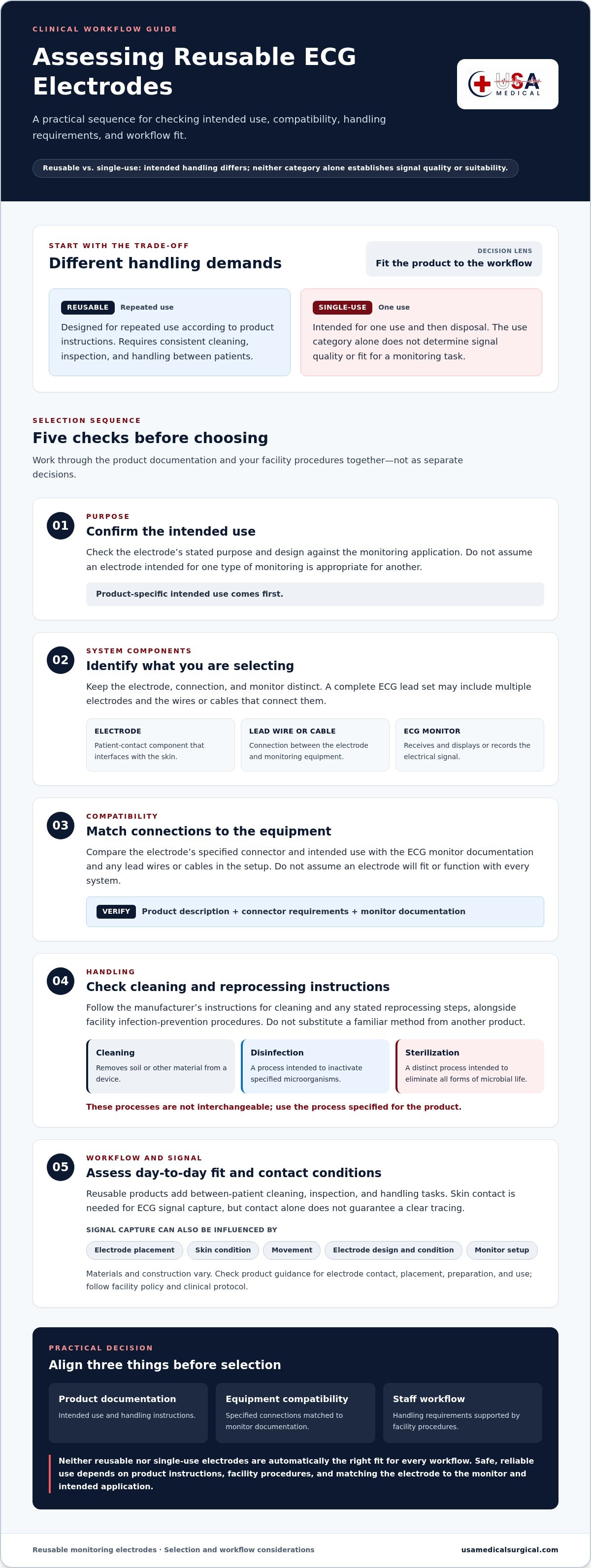
Assess reusable monitoring electrodes across the full workflow, from confirming the monitoring application to preparing the electrode for its next use. A structured review helps clinical and purchasing teams identify compatibility or handling gaps before making a selection. Use this checklist with the applicable product instructions, monitor documentation, and facility procedures.
- Define the intended use. Identify the monitoring application and electrode type specified by the clinical protocol. Review the electrode’s stated intended purpose and any use limitations. Don’t assume a product designed for one application is suitable for another based on its appearance or general category.
- Match the electrode to the equipment. Compare the electrode connection, lead or cable requirements, and intended use with the monitor documentation. Check the relevant instructions for both components. Similar-looking connectors don’t establish compatibility, and a connection that appears to fit doesn’t by itself confirm that the combination is appropriate for the system.
- Map handling from use to reuse. Write down how used electrodes are collected, who handles them, which product-specific processing steps apply, and where ready-to-use items are stored. Follow the manufacturer’s instructions and facility infection-prevention procedures. Keep used and prepared items clearly separated according to local policy.
- Review staff familiarity and workflow. Confirm that staff responsible for handling and preparing electrodes understand the applicable instructions and know where to find them. Consider whether the steps can be completed consistently within the existing workflow, including storage and any required records or traceable handling procedures. Identify unclear responsibilities or handoffs before selecting a reusable option.
- Check the complete purchasing requirements. Bring together the intended use, equipment documentation, product instructions, facility procedures, and workflow needs. Broader criteria, such as supply planning and product selection considerations, are covered in the ECG electrodes bulk supply buying guide.
A practical review should make the decision easy to explain: the electrode is intended for the application, its connection and use align with monitor documentation, and staff can follow its handling instructions under facility procedures. If any part of that chain is unclear, resolve the documentation or process question before adding the item to a routine workflow. This keeps the decision grounded in the specific product and clinical setting, rather than a general assumption about reusable supplies.
Use these criteria to browse ECG electrodes for clinical monitoring with your equipment and workflow requirements in mind.
Sourcing Reusable Monitoring Electrodes and Building a Practical Next Step
Reusable monitoring electrodes may suit a clinical workflow when staff can follow the product’s handling instructions consistently and the electrode fits the intended monitoring application. Reusability alone doesn’t determine whether an option is appropriate. Purchasing teams should bring together product documentation, monitor compatibility, and facility procedures so the selection can be assessed in its actual clinical context.
Before procurement, coordinate with the clinical team responsible for using the electrodes. Their input can clarify the application, relevant equipment requirements, and practical steps staff need to follow. Use current product labeling and facility procedures as the basis for evaluation, rather than relying on assumptions about a product category.
What to document before purchasing
Record the intended use and the clinical protocol that guides electrode selection. Note the monitor and connection requirements from the relevant equipment documentation, then compare them with the electrode’s product information. Keep these details together so purchasing and clinical teams are working from the same requirements.
- Intended use: the monitoring application and electrode purpose stated in the product information.
- Equipment requirements: monitor documentation, connection details, and any relevant system instructions.
- Handling basis: current product labeling and the facility procedures that govern use.
- Team coordination: the clinical staff responsible for use and the purchasing staff responsible for sourcing.
This record gives the team a clear reference if equipment, protocols, or product documentation changes. Keep the evaluation focused on the specific electrode and its use, not on a general assumption that reusable or single-use products are always the better choice.
Continue exploring clinical ECG equipment
Use a consistent comparison framework: confirm intended use, align the electrode with the monitor, and assess whether the product’s instructions fit facility procedures. For broader equipment context, the ECG machine buying guide can help connect electrode requirements with device selection considerations.
With the documentation and workflow needs in view, browse clinical ECG electrode supplies as a practical next step in your sourcing review.
Make Your Next Electrode Review Practical
Use your next supply review to turn clinical requirements into a clear purchasing reference. Record the intended application, equipment requirements, and workflow expectations that guide your team. This gives clinical and purchasing staff a shared basis for evaluating options, including whether reusable monitoring electrodes fit the setting’s established procedures.
USA Medical and Surgical Supplies offers ECG electrodes to customers throughout the United States. Browse the category with your product documentation and equipment requirements in mind, so your next step stays focused on the needs of your clinical workflow.
Browse clinical ECG electrode supplies and move forward with a selection process grounded in your team’s requirements.
Frequently Asked Questions
Can reusable monitoring electrodes be used with any ECG monitor?
No. Reusable monitoring electrodes aren’t universally compatible with every ECG monitor. A connector may appear to fit even when the electrode’s intended use or system requirements don’t match the monitor. Compare the electrode and monitor documentation, including any lead or cable requirements, before use. If the setup changes, such as when using a different monitor or cable, review compatibility again rather than relying on a previous configuration.
How should reusable monitoring electrodes be stored between uses?
Store electrodes as directed in the product instructions and your facility’s procedures. The labeling may specify conditions or packaging for storage between uses. Keep items designated for use separate from those awaiting handling, and avoid placing electrodes where they could be damaged, contaminated, or confused with another product. If the instructions don’t clearly describe storage, follow your facility’s process for resolving device-handling questions.
When should a reusable monitoring electrode be replaced?
Replace an electrode according to the manufacturer’s instructions, including any stated reuse limits. Also remove it from service if it shows damage, visible deterioration, or another condition that the product labeling identifies as unacceptable. Don’t set a replacement schedule based on another electrode model. If staff can’t determine whether an electrode remains suitable, keep it out of use and follow the facility’s procedure for assessing equipment concerns.
What happens if an ECG electrode has poor skin contact?
Poor contact can interfere with signal capture and contribute to a noisy, unstable, or interrupted tracing. It doesn’t identify the cause by itself. Staff should follow the clinical protocol to assess electrode placement, the skin interface, and connections, then evaluate the signal using the monitor’s instructions. If the issue persists, use the facility’s process for further assessment rather than assuming the electrode alone is responsible.
Do reusable monitoring electrodes require special skin preparation?
No single preparation method applies to every electrode. Skin preparation depends on the electrode’s design, product instructions, and clinical protocol. For instance, directions for a gel-based product may differ from those for another type. Follow the specific labeling and facility policy, and don’t add products or preparation steps based on habit if they aren’t part of the applicable instructions.
Are reusable monitoring electrodes appropriate for every clinical setting?
No. Suitability depends on the monitoring application, compatible equipment, and whether the setting can carry out the product’s handling requirements consistently. A team assessing electrodes for a busy or changing workflow should consider who is responsible for each step and how the process fits local procedures. Choose based on the documented needs of the setting, not a general preference for reuse or single use.
Browse ECG electrodes from USA Medical and Surgical Supplies to support your clinical workflow review.