
Infant Doppler: How It Differs from a Fetal Doppler
09/30/2026 05:10:45
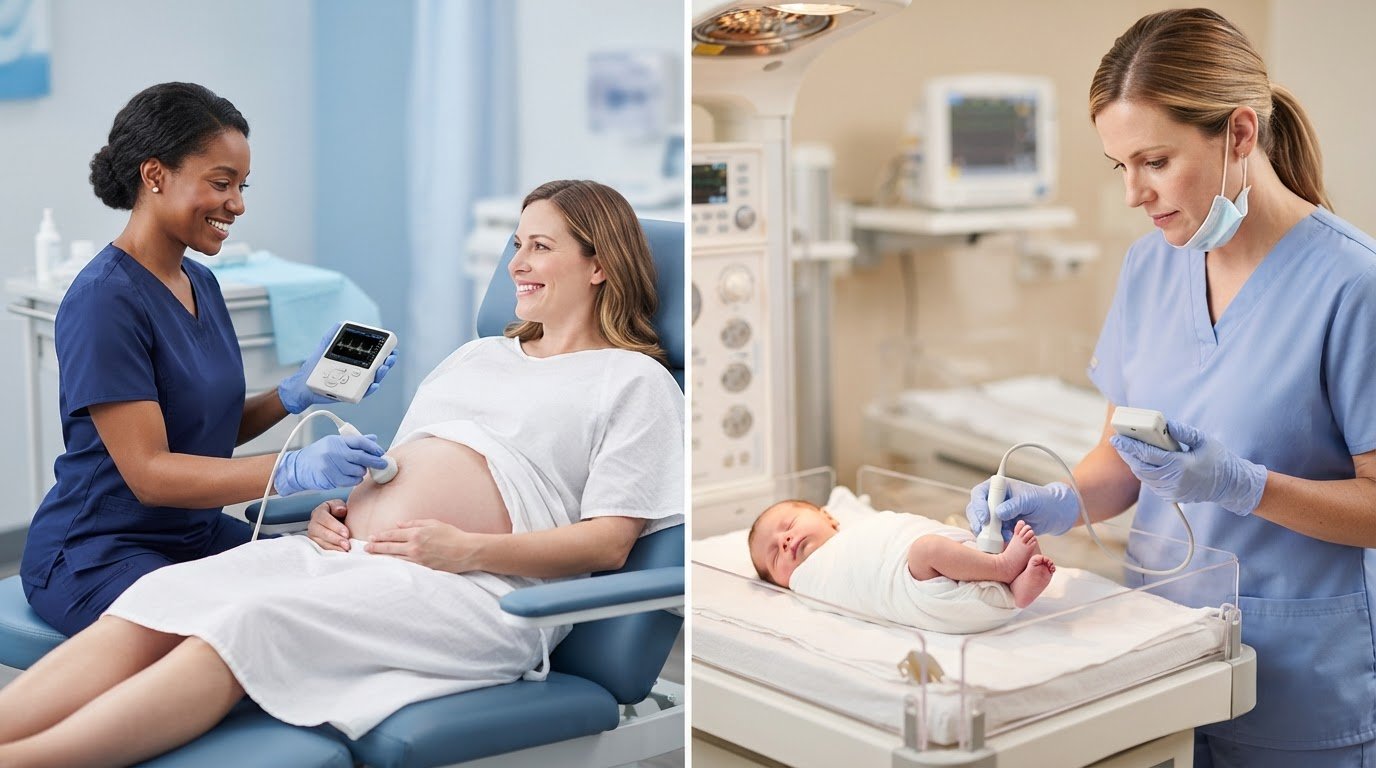
Does an “infant Doppler” check a baby before birth, or assess one after delivery? A search for “doppler infant” can lead to devices with different purposes, so the name alone isn’t enough to guide a choice. A fetal Doppler is used during pregnancy to detect a fetal heartbeat. After birth, “infant Doppler” may refer to equipment used to assess blood flow, while some people use the phrase when searching for infant vital-sign monitors.
It’s understandable to look for a simple way to check on a baby, but hearing a heartbeat or seeing a signal isn’t the same as a clinical assessment. The FDA advises against using an at-home fetal Doppler without medical guidance because a reading can be misinterpreted and may cause false reassurance or unnecessary worry.
This article explains how fetal and postnatal Dopplers differ, what their signals can and can’t tell you, and what to ask a qualified clinician or equipment supplier before selecting a device. It also offers practical checks for matching the intended use to the equipment and clinical workflow.
Key Takeaways
- “Infant Doppler” can refer to different equipment. Confirm the patient’s age, intended use, and device labeling before comparing options.
- Fetal heartbeat listening and postnatal blood-flow assessment serve different purposes and provide different information.
- Consider the intended clinical setting and operator when identifying which doppler infant category may fit.
- Before choosing equipment, check its intended use, components, compatibility, instructions, and support details with a qualified clinician or supplier.
- Use a short decision process to narrow the options, and don’t treat a detected signal as a diagnosis.
What does “infant Doppler” mean? Identify the device before comparing options
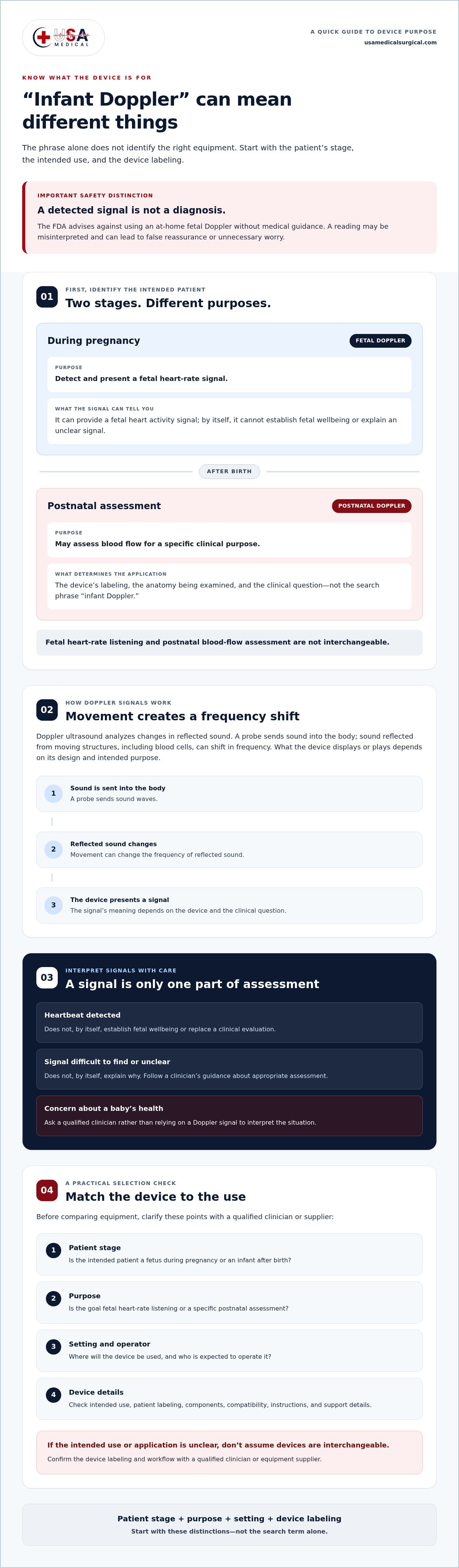
“Infant Doppler” is an ambiguous search phrase, not a dependable device category. It may refer to a fetal Doppler used during pregnancy to listen for fetal heart activity, or to Doppler equipment used after birth for a specific assessment. The patient’s age, intended use, clinical setting, operator, and device labeling determine which category applies. A sound or blood-flow signal alone doesn’t establish a baby’s overall health.
Doppler equipment uses changes in reflected sound to detect movement. The principles of Doppler ultrasonography help explain why devices can produce different signals, but each device’s design and labeled purpose determine its application. Similar terminology doesn’t make equipment interchangeable.
Fetal Doppler and infant Doppler are not automatically the same
A fetal Doppler is used during pregnancy to detect and present a fetal heart-rate signal. A postnatal Doppler may be used as part of an infant assessment, but the device’s labeling and the clinical workflow must support that use. Don’t assume that equipment intended for fetal listening can assess a newborn after delivery, or that every device described as an infant Doppler measures the same thing.
Before comparing devices, check the labeling for the intended patient, use, and setting. If those details aren’t clear, ask a qualified clinician or the equipment supplier to explain them.
Who may be searching for an infant Doppler?
Parents and caregivers may use the phrase while looking for a way to listen for a heartbeat during pregnancy or while seeking information about monitoring a baby after birth. Healthcare purchasers may be looking for equipment that fits an infant-care workflow. These are different needs, even when the search terms overlap.
Before choosing equipment, clarify:
- Patient stage: Is the intended patient a fetus during pregnancy or an infant after birth?
- Purpose: Is the goal fetal heart-rate listening or a specific postnatal assessment?
- Setting and operator: Where will the device be used, and who is expected to operate it?
For a clinical purchase, match those answers to the device’s stated intended use and the required workflow. For personal questions about a baby’s health, ask a qualified clinician rather than relying on a Doppler signal to interpret the situation.
How Doppler devices detect signals, and what those signals can tell you
Doppler ultrasound detects movement by analyzing changes in the frequency of reflected sound waves. A probe sends sound into the body, and some of it reflects from moving structures, including blood cells. The frequency shift can be used to assess blood-flow movement. MedlinePlus explains how Doppler ultrasound works and describes its medical uses. What a device displays or plays depends on its design and intended purpose.
This distinction matters when someone searches for a doppler infant. Fetal Doppler equipment is generally used during pregnancy to detect and present a fetal heart-rate signal. A postnatal Doppler used in a clinical assessment may gather blood-flow information for a particular purpose. The signal and clinical question differ, so the terms aren’t interchangeable.
Fetal heart-rate listening during pregnancy
During pregnancy, fetal Doppler equipment is used to detect fetal heart activity and provide a heart-rate signal. This may be one part of an assessment, but the signal alone can’t establish fetal wellbeing. A signal that’s difficult to find or unclear doesn’t, by itself, explain why. Similarly, detecting a heartbeat isn’t a complete clinical evaluation or a reason to dismiss concerns. Follow a clinician’s guidance when interpreting findings and deciding what assessment is appropriate.
For more on clinical selection and application, consult the site’s Fetal Doppler Technology: Clinical Guide to Selection, Frequencies, and Diagnostic Use.
Postnatal Doppler assessment in clinical settings
After birth, Doppler assessment may involve detecting blood-flow signals, depending on the device, the anatomy being examined, and the clinical question. “Infant Doppler” doesn’t identify one universal examination or guarantee that a device suits every infant-care workflow. Confirm the intended patient and use against the exact device labeling. If the terminology or application isn’t clear, check with a qualified clinician.
In either context, a Doppler signal is information to interpret, not a diagnosis or proof that a baby is well. For clinical purchasing, verify that the device’s labeled purpose and capabilities fit the intended workflow before comparing options. Once the clinical use is clear, you can explore Doppler equipment by category.
Fetal Doppler vs. postnatal infant Doppler: compare purpose, setting, and user
The clearest distinction is the patient stage and clinical question. A fetal Doppler relates to pregnancy and fetal heart-rate listening. “Postnatal infant Doppler” is less specific and may refer to equipment used for a particular blood-flow assessment after birth. The phrase alone doesn’t identify an examination or confirm that a device suits a particular patient.
| Comparison point | Fetal Doppler | Postnatal infant Doppler |
|---|---|---|
| Intended use | Detects fetal heart activity during pregnancy. | May support a specific postnatal assessment, depending on the device’s labeled purpose. |
| Patient stage | Fetus during pregnancy. | Infant after birth, if the device is labeled for that patient and use. |
| Typical setting | May be used in a healthcare setting; consumer products also exist. Use should follow clinician guidance. | A clinical setting where the device and assessment fit the care workflow. |
| Operator | May vary by setting and device. A signal should be interpreted with appropriate clinical guidance. | A qualified healthcare professional using the device for its intended purpose. |
| Signal purpose | Provides a fetal heart-rate signal. | May provide blood-flow information relevant to a specific assessment. |
Which device category matches the situation?
For pregnancy-related listening, discuss fetal Doppler equipment with a clinician. For an infant after birth, first identify the clinical assessment required. Don’t select a device based only on the words “infant Doppler.” If the intended use, patient category, or signal purpose is unclear, confirm the appropriate equipment with the healthcare professional responsible for the assessment.
Why the user and setting change the comparison
A caregiver looking for information and a clinician conducting an assessment have different needs. Hearing a signal at home doesn’t provide the same context as a clinician’s assessment, and shouldn’t be treated as equivalent. In a clinical environment, match the device’s labeling and instructions to the intended patient, examination, operator, and workflow. Don’t assume that a consumer fetal listening device and postnatal clinical equipment can substitute for each other unless the product labeling supports that use.
Bottom line: Choose by intended use and appropriate clinical oversight, not by the word “infant.” If you’re searching for “doppler infant,” first confirm whether the need involves pregnancy or a postnatal assessment.
Can a fetal Doppler confirm an infant is well? Understand the limits
No. Detecting a heartbeat or another signal with a Doppler doesn’t confirm that a fetus or infant is well. A device provides information only within its labeled purpose. It doesn’t independently assess overall health, and a sound or reading shouldn’t be treated as a diagnosis.
The FDA advises against using an at-home fetal Doppler without medical guidance. A signal can be misinterpreted, creating false reassurance or unnecessary anxiety. Hearing a fetal heartbeat doesn’t establish that everything is fine, and not finding a signal doesn’t explain what’s happening. Neither result replaces assessment by a qualified healthcare professional.
What a detected signal can, and cannot, establish
A fetal Doppler may detect fetal heart activity and provide a heart-rate signal. That is a limited observation, not a complete assessment of fetal wellbeing. Similarly, a postnatal Doppler may provide information relevant to a specific assessment, but what it can show depends on the device’s intended use and the clinical question. Don’t assume a consumer device assesses every aspect of fetal or infant health.
Interpretation requires context, appropriate clinical assessment, and attention to the device’s labeling. A reassuring-seeming result shouldn’t override a concern, and an unclear result shouldn’t be used to reach a diagnosis on your own.
When to contact a healthcare professional
If you have a concern about your pregnancy or infant’s health, contact your clinician or an appropriate care service. Don’t use a Doppler result to postpone seeking advice. During pregnancy, a change in fetal movement should prompt a call to a healthcare provider, regardless of what an at-home Doppler seems to show. A signal doesn’t replace attention to changes or concerns you’ve been advised to report.
The same caution applies when searching for a “doppler infant” device after birth. Home monitors that claim to measure vital signs aren’t a substitute for adult supervision or safe sleep practices. In its September 2025 safety communication, the FDA warned about unauthorized infant monitors making such claims and noted that no infant monitoring device has FDA authorization to prevent or reduce the risk of SIDS.
For equipment selection, first confirm the intended clinical use and oversight with a qualified clinician. Once the need is clear, explore Doppler equipment by category and check device-specific claims against the labeling.
How to choose an infant Doppler category and take the next step
Start with the clinical need, not the search phrase. “Doppler infant” can point to pregnancy-related fetal listening or equipment for a postnatal clinical assessment. Work through these questions before comparing devices:
- Who is the patient? Is the device for use during pregnancy or after birth?
- What task should it support? Identify the signal or assessment required instead of relying on a broad category name.
- Where will it be used, and by whom? Consider the care setting, expected operator, and how the device fits the existing workflow.
- What must the device include or connect with? Check components, compatibility, instructions, and relevant support details against the specific listing.
For personal health concerns, speak with a clinician before shopping for equipment or trying to interpret a signal. A device isn’t a substitute for clinical guidance.
Questions to ask before selecting equipment
For a clinical purchase, confirm the task the device is intended to support and who will operate it. Review the exact product labeling and instructions. Check which accessories are included, whether the device fits the intended workflow, and what cleaning requirements apply. These details can vary by device, so don’t infer them from the phrase “infant Doppler.” Verify current specifications and availability on the specific product listing or with the equipment supplier.
Explore Doppler equipment by intended use
Pregnancy-related fetal listening and postnatal clinical assessment are distinct purposes. Identify which one applies, then compare only equipment whose stated use fits that need. For broader clinical selection and frequency context, consult Fetal Doppler Technology: Clinical Guide to Selection, Frequencies, and Diagnostic Use. Confirm device-specific claims against the labeling.
Once the intended use is clear, explore Dopplers in the retailer’s online catalog by category. Check the listing details before making a selection, and ask a qualified clinician to clarify any uncertainty about clinical use. Choose equipment for its defined purpose and workflow, not simply because it is described with the word “infant.”
Choose the right Doppler category with confidence
The phrase “doppler infant” can point to different needs. A fetal Doppler is associated with listening for fetal heart activity during pregnancy, while postnatal Doppler equipment may support a specific clinical assessment after birth. Patient stage, intended use, setting, and device labeling are more useful selection criteria than the category name alone.
A detected signal doesn’t confirm overall wellbeing or replace professional assessment. For personal health concerns, contact a qualified clinician. For clinical procurement, confirm the intended use, components, compatibility, instructions, and workflow fit on the specific listing before choosing.
USA Medical and Surgical Supplies lists Dopplers among its medical-equipment offerings. Product specifications and intended uses can vary, so review listing details and confirm clinical questions with the appropriate professional or supplier. Browse Dopplers by intended use once you’ve identified the relevant category.
Frequently Asked Questions
What is an infant Doppler?
“Infant Doppler” isn’t one precise device category. The search term “doppler infant” may refer to fetal heart-rate listening during pregnancy or Doppler equipment used for a specific assessment after birth. The meaningful distinction depends on the patient, intended clinical use, setting, and device labeling. Before comparing equipment, identify the signal or assessment needed and confirm the intended use with a qualified clinician or the equipment supplier.
Is an infant Doppler the same as a fetal Doppler?
No. The terms don’t automatically describe the same equipment or purpose. A fetal Doppler is associated with detecting fetal heart activity during pregnancy. “Infant Doppler” may refer to postnatal equipment used for a particular clinical assessment, depending on its labeling. Similar names don’t establish that devices are interchangeable. Check the intended patient and use on the specific device information, and ask a clinician if the distinction is unclear.
Can a fetal Doppler be used to assess a newborn after birth?
Don’t assume a fetal Doppler is suitable for assessing a newborn. Use after birth depends on the device’s labeled intended use and the assessment required. A fetal heart-rate signal during pregnancy isn’t the same as postnatal assessment information. Ask the clinician responsible for the newborn’s care which device category, if any, fits the clinical question. Verify the specific device labeling before considering it for a postnatal workflow.
Can a home fetal Doppler confirm that a baby is healthy?
No. Hearing a fetal heartbeat at home doesn’t confirm overall fetal wellbeing, and not finding a signal doesn’t diagnose a problem. The FDA advises against at-home fetal Doppler use without medical guidance because signals can be misinterpreted, potentially causing false reassurance or unnecessary anxiety. Don’t use a device result to delay contacting your healthcare professional about a concern. Follow your clinician’s advice for assessing pregnancy and fetal health.
What is the difference between a fetal Doppler and a vascular Doppler?
A fetal Doppler is used to detect fetal heart activity during pregnancy. A vascular Doppler is used to assess blood-flow signals in a clinical context. These categories address different assessment purposes, so their equipment and results shouldn’t be presumed interchangeable. The specific anatomy, patient, and intended examination matter. For an infant after birth, confirm the required assessment and check that any device under consideration is labeled for that patient and use.
Who should use a Doppler to assess an infant?
A qualified healthcare professional should determine whether Doppler equipment is appropriate for an infant assessment and who should operate it. The answer depends on the clinical task, the device’s labeled intended use, and the care setting. Caregivers shouldn’t treat a sound or reading as a diagnosis or substitute for professional assessment. If you’re concerned about an infant’s health, contact the clinician responsible for the child’s care rather than relying on a device signal.
What should I check before choosing a Doppler device?
First define the patient stage, clinical purpose, setting, expected operator, and workflow. Then review the specific device’s intended-use labeling, instructions, included components, compatibility, and cleaning requirements. Don’t infer specifications or suitability from a broad category name. Confirm details on the exact product listing or with the supplier. For a personal health concern, consult a clinician before shopping. A retailer’s Doppler category can help you explore equipment once the intended use is clear.